Analyses & Studies
Article | Economic Letter: East Africa and the Indian Ocean - November 2025
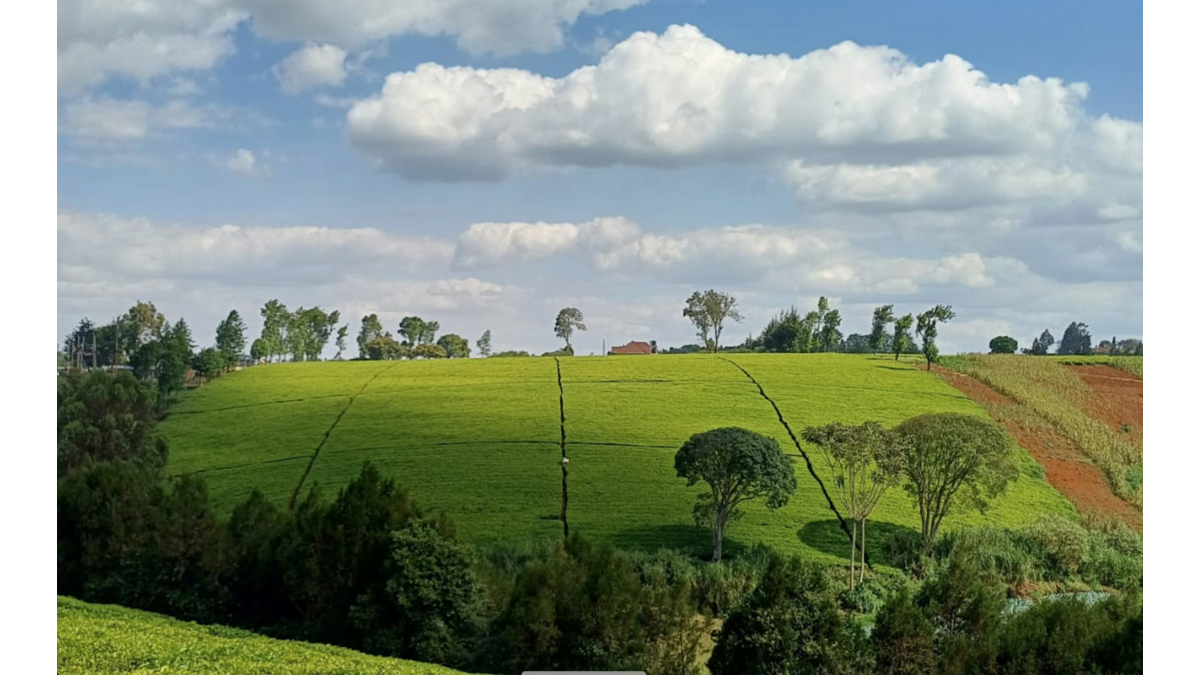
We are pleased to share insights from the French Treasury, offering economic analysis and sector-focused reports.
Export Crops in the IOEA — an economic and social pillar in transition
The French Treasury (Direction générale du Trésor), under the French Ministry of Economy and Finance, publishes Economic Letters through its regional services to provide in-depth analysis of key economic sectors and trade dynamics in partner countries.
This edition examines export crops across East Africa and the Indian Ocean (IOEA), tracing their central role as engines of growth, foreign exchange earnings and rural employment. From Ethiopian coffee to Kenyan tea, Malagasy vanilla and Tanzanian cotton, these value chains — many rooted in the colonial era but reshaped by liberalisation, diversification and quality upgrading — remain deeply embedded in the region's economic and social fabric, accounting for up to 80% of some countries' export revenues and sustaining millions of rural livelihoods.
Kenya exemplifies regional success, with tea, coffee and horticulture contributing nearly 40% of national exports and supporting around fifteen million people. Coffee and tea dominate in Rwanda and Burundi, providing income to roughly a fifth of Rwanda's population and over half of Burundian households, while Uganda relies on export crops for about 40% of non-gold export earnings and 70% of employment. Ethiopia's coffee, cut flowers, oilseeds and pulses make up over 80% of agricultural export revenue, and Madagascar, Comoros and Mauritius anchor their rural economies around vanilla, cloves, cocoa, sugar cane and essential oils. In Somalia and Sudan, export crops such as sesame, groundnuts, cotton and dried lemons remain modest but vital for rural resilience.
Sector governance rests on public institutions, cooperatives and private actors — Kenya's Tea Development Agency and Tea Board, Rwanda's NAEB, Burundi's ODECA and OTB, Ethiopia's Coffee and Tea Authority, and the Comoros' Office comorien des produits de rente (created 2022) — which have driven quality gains but leave value chains constrained by weak agri-logistics infrastructure, limited access to finance and minimal local processing, with most output still exported raw.
These sectors are a major source of rural income — over 2.5 million people in Rwanda, more than five million households in Uganda, hundreds of thousands of smallholders in Tanzania, and around 400,000 direct jobs from vanilla and cloves in Madagascar — while also supporting women's and youth economic inclusion. Persistent challenges include global price volatility, narrow export-market concentration, weak infrastructure, low local transformation, and rising EU and Asian quality, traceability and sustainability requirements that strain ill-equipped smallholders, compounded by climate change impacts such as drought and soil degradation.
Overall, the Letter underscores that governments and private actors are pursuing reforms centred on diversification, local processing, climate-smart agriculture, digital traceability and international certification, with public-private partnerships professionalising cooperatives and strengthening governance. The long-term sustainability of the region's export crop sectors will hinge on local value addition, climate resilience, institutional coordination and fairer producer remuneration — positioning them as both an economic asset and a strategic driver of regional integration and stability.


