Analyses & Studies
Article | Economic Letter: East Africa and the Indian Ocean - July 2026
We are pleased to share insights from the French Treasury, offering economic analysis and sector-focused reports.
Urban and Interurban Rail Transport in the IOEA: a strategic lever for growth, connectivity and sustainable mobility
The French Treasury (Direction générale du Trésor), under the French Ministry of Economy and Finance, publishes Economic Letters through its regional services to provide in-depth analysis of key economic sectors and trade dynamics in partner countries.
This edition examines the resurgence of rail transport across East Africa and the Indian Ocean (IOEA), where governments increasingly view rail corridors as structuring infrastructure for logistics competitiveness, regional integration and transport decarbonisation, amid strong demographic growth and rapid urbanisation. France is positioning itself as a reference partner, drawing on recognised engineering expertise and an integrated offer spanning the rail value chain.
Regional situations are highly differentiated. Under the East African Railway Master Plan's Standard Gauge Railway (SGR) framework — built around the Northern Corridor (Mombasa–Nairobi–Kampala, with planned extensions to Rwanda, Burundi, South Sudan and eastern DRC) and the Central Corridor (Dar es Salaam through Tanzania toward Mwanza, Kigoma, Rwanda and Burundi) — Tanzania and Kenya lead the region's rail renewal. Tanzania has the most advanced SGR, with its Dar es Salaam–Dodoma sections operational since July 2024 and over 5 million passengers carried, while Kenya launched construction of the Naivasha–Kisumu–Malaba extension in March 2026, though its existing Mombasa–Nairobi line remains loss-making, with ridership down 10.3% in 2024. A second group — Uganda (SGR contract signed with Turkey's Yapi Merkezi, financing unresolved), Burundi (new USD 2.15bn Uvinza–Musongati line, construction launched August 2025) and Rwanda (corridors still pre-construction) — is pursuing major projects still dependent on complex financing. A third group, including Djibouti (its share of the loss-making, fragmented Addis Ababa–Djibouti line) and Madagascar (a largely defunct century-old network awaiting revival via a World Bank-financed USD 200m multimodal logistics project), faces more entrenched structural difficulties.
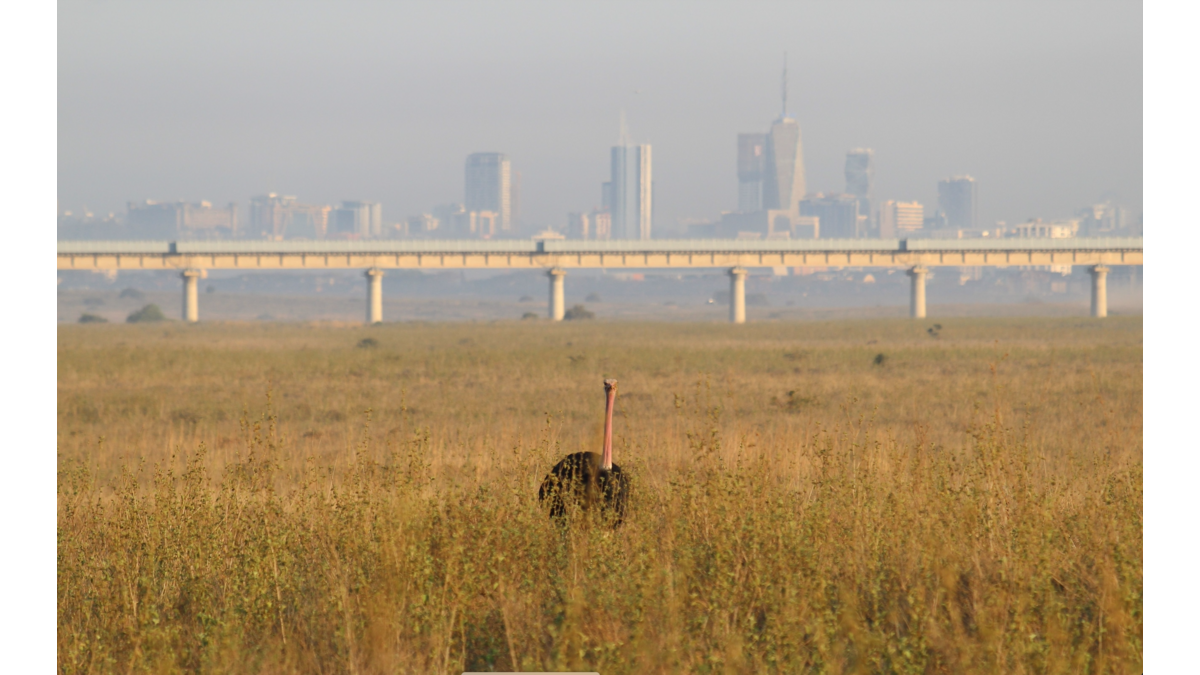
Urban rail mobility remains comparatively underdeveloped despite rising congestion. Kenya's Nairobi Commuter Rail (165km, five lines) is drawing growing donor interest — including a EUR 128m French Treasury loan for Line 5 — but still carries only 20,000 passengers daily; Mauritius's Metro Express (opened 2019, ~45,000 daily riders) and Addis Ababa's Light Rail Transit (operational since 2015, only 17 of 41 trainsets running) remain financially strained, while Uganda and Rwanda are still at feasibility or bus-rapid-transit stages rather than rail.
Financing patterns are shifting: Chinese firms and banks pioneered the sector (funding 90% of the Mombasa–Nairobi line and nearly all of the Addis Ababa–Djibouti line) but face growing competition from Turkish contractors (Yapi Merkezi) and multilateral institutions (AfDB, World Bank, Islamic Development Bank), often paired with European export credit agencies, even as several projects remain stalled on incomplete financing packages.
Overall, the Letter highlights France's strengthening position in strategic segments — notably the EUR 128m Treasury loan for Nairobi Commuter Rail Line 5 (civil works contract signed May 2026, involving UIF France, CIM and Infras), Systra's engineering studies in Kenya, Ethiopia and Uganda, Alstom's signalling contracts across Tanzania's SGR, and AFD's EUR 178m financing of Dar es Salaam's BRT — pointing to further opportunities in signalling, electrification, supervision systems, environmental assessment and institutional capacity-building for regional railway authorities.


